Iconography of the U.S.

Amanda Lyons

Image result for mcdonalds


For this assignment I chose the famous golden arches of McDonalds. I chose the golden arches because being one of the most popular fast food chains in the world, it is an icon that is recognizable to just about anyone. McDonalds imposed upon other cultures around the world in an attempt to persuade or gain favor and to achieve business purposes back in.

The famous golden arches of McDonalds was introduced back in 1968, created by one of the McDonald brothers himself, Richard McDonald. He originally thought that they would catch people’s attention to bring them into their restaurant. The arches now resemble the letter “M” for McDonald’s. The arches have become so iconic in the U.S. because it has become recognizable to everyone. By the 70s it was already one of the most recognizable logos. It helps that the huge bright letter “M” is easy to spot from a mile away. Some other characteristics of the logo that make it so easy to recognize include, it’s simple clutter free design, the use of only two or three colors, and the bulky font. These contribute to being a great logo because customers evoke feelings to certain types of logo designs. The design McDonalds chose is pleasing and easy on the eyes. Don’t forget the infamous “I’m lovin’ it”!

McDonalds had 14,146 locations in the U.S. alone, worldwide there are more than 36,000 restaurants. Outside of the U.S. the golden arches are just as recognizable as they are to anyone here.

The cultural response of the usage of the golden arches has had an extremely positive impact on McDonalds company all around the world. The golden arches are in fact, golden, which often leads viewers to believe it must be good food. The design is modern and sleek which appeals to many eyes. A lot of their advertising is psychological based on their logo. For example, the usage of red and yellow wasn’t just a random choice. The color red is actually a stimulating color and is associated with being active. It also can increase heart rate which can help your appetite and make you feel hungry. The color yellow is known to be associated with feeling happiness and is an extremely bright, visible color in daylight. That is another reason why the McDonald’s sign is so easy to see from afar.

I truly believe that this icon for McDonalds works equally to cultures around the globe. The golden arches shouldn’t be changed in any culture because it is so simple it doesn’t appeal to just one person it appeals to everyone. The main difference between McDonalds in the U.S. and around the world is the type of fast food they sell. While McDonald’s sells their signature burgers everywhere they do change their menus based on their locations. For example, in Japan, you might see The Shakachiki Red Pepper chicken and in the UK, they sell Mozzarella dippers. In Spain, they sell gazpacho. They even sell a pasta dish in Hong Kong.

The theorist I feel fits this assignment best is Arjun Appadurai. Appadurai talked about the difference in the global cultural economy. He described the history of cultural difference and how there have been many challenges. He said, “But few will deny that given the problems of time, distance, and limited technologies for the command of resources across vast spaces, cultural dealings between socially and spatially separated groups have, until the past few centuries, been bridged at great cost and sustained over time only with great effort”. This describes that in the past it has been extremely difficult with the social and culture gaps but with the technology we have today it is much easier. This connects to our class discussion based on the deep reading we did on Appadurai. It has helped companies like McDonalds, branch out of the U.S. and into other countries. With the technology we have today it is easy to advertise worldwide.

From completing this assignment I learned about many icons that are known worldwide. For example, Disney is such a famous company that there is even a Disneyland in Paris. Disney was originally created by Walt Disney himself here in the U.S. and has made its way around the globe. I also learned how important logo designs are to drawing the attention of customers.

The Brain/Pharma Ads

Amanda Lyons

While viewing both simulation sites to learn more about the brain, I found it extremely interesting how incredible the brain really is. However after viewing the sites, I wouldn’t change much about my day to day lifestyle, mainly because I don’t do much to cause my brain any long term harm! If anything, I might try to exercise once in awhile to help improve brain health and stimulate blood flow. I will also try to read more books and try some puzzles to challenge my brain and help develop more brain cells.

I think viewing the brain anatomy definitely helped me understand its functions a lot more than I thought I knew. I went into school wanting to go into the medical field, so I already had interest in this topic. After reading and looking through the simulations I learned so much more about how important the brain is in order to make every little function in your body work. After downloading the app to view the G2C: 3D brain simulation I learned about each part of the brain. When you tap on a brain structure, you can tap on “T” for info. It gives an overview, case study, associated functions, associated cognitive disorders, associated with damage and more! I read into the corpus callosum. This structure controls movement in the opposite side of the body can helps perform specific cognitive and perceptual functions. This was interesting to me mainly because one of the associated cognitive disorders happens to be Alzheimer’s, which is a disease my grandmother had for years. This part of the brain allows information to pass between right and left hemispheres, which explains why my grandmother wasn’t able to identify us or speak what was on her mind.

Yes I think these sites do a good job illustrating how the truth can be made visible. By viewing these sites, you are provided with scientific evidence and real facts to show that this information is true.

Both simulations are different in that one provides heavy text, like you are reading an article, while the other lets you click on each part of the brain to view the text about it. The Healthline’s map of the brain and the G2C: 3D brain simulation are similar in that they both provide amazing information to promote interest in the brain and all of its amazing functions.

Image result for claritin ads

I chose the pharmaceutical ad for Claritin. Claritin is a popular antihistamine used to treat allergy symptoms. Some of these symptoms Claritin claims to relieve include, itching, runny nose, watery eyes, hives, and sneezing from “hay fever” and other allergies. This ad somewhat contains a checklist of some of the symptoms that viewers are looking to treat.

Some side effects from this drug may include headache, sleepiness, feeling tired, drowsiness, fatigue, nervousness, stomach pain, diarrhea, dry mouth, sore throat, hoarseness, eye redness, blurred vision, nosebleed, or skin rash. The list of side effects is just as long, if not longer than the list of symptoms.

The ad promises to its consumers that no other drug works stronger than Claritin. It also promises 24 hour relief indoors and out, only non-drowsy Claritin is proven to keep you as alert and focused as some without allergies. The images promote relief from allergies, being able to relax and enjoy being outdoors.

The theorist I feel fits this assignment best is, Raymond Williams, because he proposed an idea about the magic of advertising. He said that there is a magic in advertising that allows consumers to feel like the certain product will definitely create a magical transformation in their lives. Pharmaceutical advertisements have the same idea, that they will drastically change your life. Talking about advertisements and the approaches taken to make them effective was interesting to learn about because everyone is a consumer.

From completing this assignment, I learned about how important the brain is. Every function is important to bodily functions.

Pastiche

Amanda Lyons

Image result for pastiche example
https://www.broadwayworld.com/board/readmessage.php?thread=1032703
#19 on the list******

Image result for andy warhol marilyn monroe art

Citation-

2011 June 5th, What Exactly Does the Word Pastiche Mean?.

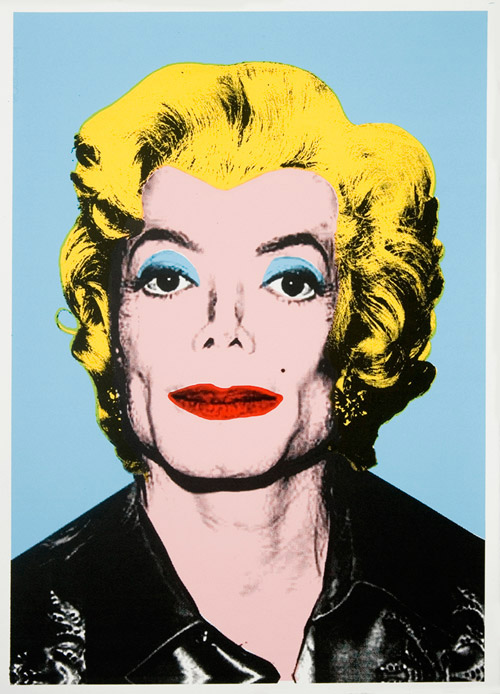
This reworking of Andy Warhol’s art, is a perfect example of a pastiche. Warhol was a well known American artist and he was a leading figure in visual art movement which was known as pop art. The pastiche image imitates the style of Warhol’s infamous pop art which began back in 1967. It changes his first print of Marilyn Monroe by replacing her face for Michael Jackson’s.

This example is not only a pastiche but it is also a parody. This is an example of a parody as well because it is has been reworked as Michael Jackson which is supposed to promote a comical effect towards the audience.

fish ocean sea horse sea life shark water - 6230017792
https://memebase.cheezburger.com/graphjam

I believe this example from the website GraphJam can be a reworking of past anatomy of well known animals in the ocean. The first image is a drawing of a shark. The parts of the shark that are labeled are obviously not the correct parts, they have been switched to something funny. For example, the arrow pointing to where the sharks brain would be, says “murderous thoughts” which is funny because sharks are known for being vicious and have no predators. These examples of pastiches are also parodies because they are meant to be relatable and funny. The entire website is full of funny “memes” and parodies of charts, graphs, and well known images.

This work definitely questions the original anatomy of these animals. The drawing of the whale only has arrows pointing all over the body pointing to what would normally be labeled as blubber but now changed to “fat” everywhere. The drawing of the seahorse has a tiny saddle, and a “curly part” which is obviously not the real anatomy of a seahorse.

I would say this assignment best relates to the film theorist Richard Dyer who said, “The primary way to understand pastiche is as an imitation that announces itself as such and that involves combining elements from other sources.”. He further explained that a pastiche can be a type of work that imitates another work that had been previously produced. This description of pastiche can be illustrated in the work of the Monroe print by Warhol compared to the Jackson print. The creator of this pastiche imitated his style of art and created something similar yet entirely different.

I was able to connect this assignment to our class discussion from the movie Shrek. The movie showed many examples of parodies. We discussed a few including, Cinderella, Sleeping Beauty, Snow White, The Gingerbread Man, The Three Blind Mice, and so many more. It was interesting to connect a childhood movie to learning about pastiches and parodies, and find such little details I had never noticed before.

From completing this assignment, I was able to learn more about the difference between a pastiche and a parody. I also learned how they can work together and separately to be effective in different ways. A pastiche can be complimentary, but with the addition of parody, it can often times become offensive.

Culture Jamming

Amanda Lyons

Related image
Image result for burger king

I chose the burger king ad because it is an extremely well known, mass-produced advertisement worldwide. Burger King has been around since 1953, and it has become a global fast food chain. Burger King has millions of consumers each day. The ad I chose, “Murder King” is suggesting that if you eat at Burger King, it will kill you. Fast food chains have had a lot of controversy over the years because people claim they are “making America obese”, and the food is “not real”. Burger King has even had many lawsuits over the years due to nutritional issues and even disputes with PETA on animal rights. While fast food can be extremely unhealthy, it is your choice to eat it or not.

I chose to do an oppositional reading on how bad fast food can be for one’s diet and health. Burger King, and many other fast food restaurants such as McDonalds, Wendy’s, White Castle, Chick Fil A, Taco Bell, Kentucky Fried Chicken, Popeyes, Dairy Queen, Sonic, etc. all seem to focus their advertisements on how affordable their food is. However, they ‘forget’ to mention the long term effects that their unhealthy food has. This is why I chose to change “Burger King” to “Murder King”. The food may taste really good and be super cheap, but they are really drawing their consumers attention away from how unhealthy the food is, or how it will ‘murder you’.

I was able to connect the text to the advertisement because the only thing that was changed was the substitution of one word, ‘Burger’ to ‘Murder’, and kept the rest entirely the same. The text described how fast food is bad for your health, which my advertisement does. The advertisement also fools you in that it looks pretty much the same but has a different meaning.

I think this assignment can relate to the thinker Kalle Lasn, who said that “culture jamming is, at root, just a metaphor for stopping the flow of spectacle long enough to adjust your set”. Culture jamming describes the ability for individuals to stop and think about an advertisement and rework their opinions and feelings on the visual. Additionally, the term detournement relates to this assignment, because it is defined as “rerouting of messages to create new meanings”, which is exactly what chose with the Burger King advertisement. The advertisement was reworked by replacing one word to change the meaning.

I was able to connect this ad to the ad we discussed in class about McDonald’s. Instead of the infamous “I’m lovin it” the ad was changed to “I’m gainin it”. This is similar to the Burger King advertisement.

I learned from completing this assignment that most companies produce certain advertisements to hide some other hidden fact. In both the class example and my advertisement, fast food chains produce advertisements to hide the fact that their food is extremely unhealthy. I also learned that culture jamming is more popular than I thought and it is really easy to change an advertisements entire meaning by changed one tiny thing.

Media Tracking

Amanda Lyons

Image result for media

I definitely noticed that I use Instagram and iMessage the most out of all the forms of media. I used Instagram for roughly two and a half hours over the two days. I do not use my phone all day at work and when I do go on instagram, it’s only for five minute periods. I will open it, look through some posts and exit out of it after only a few minutes. I do however use iMessage quite often. I am texting people all throughout the day, unless I am working. Over the two day period I roughly used iMessage for four hours.

I found that I use email and snapchat the least but still use somewhat. I never check my email unless it’s for school. I had to check it once on Thursday for a few minutes and that was about it. As for snapchat, I open it a few times throughout the day but I never open or answer any of my friends. I would say I used snapchat for an hour in total from the forty-eight hour period.

I spend hours communicating with people all day. iMessage is the most used, I am constantly texting my friends family and boyfriend. I don’t do phone calls as much, but I do call people a few times a day or FaceTime. My sister and I FaceTimed for 21 minutes on Saturday.

I tend to leave the TV on in the background for hours while I do laundry or homework. I do watch it for a couple of hours before I go to bed almost every night. On Friday, I left the TV on playing House Hunters for about 4 hours while I worked on homework and cleaned up my apartment. Then again on Friday night I watched Cutthroat Kitchen for three and a half hours before bed.

It surprised me that I do not use media as much as I thought I did. My phone and my TV are my most used media sources. I was also surprised that when I am on my phone, I waste a lot of time scrolling through apps because I don’t notice how much time is actually passing.

I don’t think I will change anything about the way I use media based on this exercise. If anything I will try to use social media apps on my phone less frequently.

I will maintain the current amount of time I spend on media because I don’t think I use it too much. When I am at work for nine hours I cannot check my phone at all. Other than that I need to communicate with many people throughout the day, and I don’t think leaving my TV on counts as “watching TV”.

I would say that the thinker Marshall McLuhan best fits this assignment. He wrote a lot about the effect that the message from different types of media has and how it is perceived by an audience.

A connection I made from our last class discussion was when we discussed different types of media and what they amplify, reverse or flip, retrieve and obsolesce. Specifically Facebook, but when I connected it I used instagram and thought of the ways it has amplified unrealistic expectations for our lives and retrieved old memories all at the same time.

From completing this assignment, I have learned that I do not use my phone as much as I thought I did. I definitely noticed that ever since I started working I haven’t felt the need to check my phone every two minutes. This assignment can definitely be an eye opener to people who are addicted to their phone and being on it all hours of the day.

Media Log-

https://docs.google.com/spreadsheets/d/1pIfITcPPUGkoHUPqTt4EmMCHnDKW20RoeRE45u9q9B4/edit#gid=0

Creative Commons

Amanda Lyons

Image result for creative commons

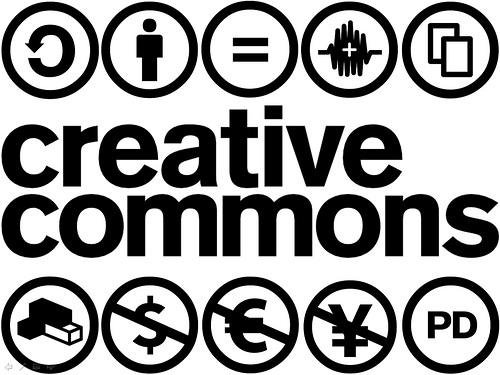
The Creative Commons project alters the way we understand ownership and copyright. It allows us to share knowledge and creativity legally, by providing copyright licenses in order to give the public the ability to work on and share your work depending on what you allow. This site is changing how we view copyrights because it completely goes against what we know and allows works to be built on and distributed. We typically see a copyright as a complete ownership of a certain work, meaning you cannot use or copy any of that work for your own. You would have to cite and give credit to the true owner in order to use their work. This organization is devoted to “expanding the range of creative works available for others” and “has released several copyright-licenses, known as Creative Commons licenses, free of charge to the public.”.

This project can however affect the subject(s)of a work. For example, if someone were to create upon another’s work in a negative way or change the entire meaning, they could also try to claim it as their own. Having such ability to really create whatever you want, it can really go either way, positively or negatively.

Having a Creative Commons license can be a great advantage, it may have altered the works cited in the work of Sherrie Levine and Michael Mandiberg. A man named Walker Evans in 1936 photographed a family of sharecroppers during the depression era. In 1979, Sherrie Levine then rephotographed his work from the exhibition catalog First and Last. In 2001, Michael Mandiberg scanned the photographs and posted Levine’s copies online. Mandiberg’s work is controversial as to whether or not it is considered stealing, or recreating another’s work. If Levine and Mandiberg had a Creative Commons license they would have been able to create whatever they wanted with the original photograph and call it their own rather than rephotographing or scanning the work.

The Creative Commons project can also afford the protection to the right of publicity. It allows the freedom to share your work with the license,“When you apply…a CC license to your material, you also agree to waive or not assert any publicity, privacy, or personality rights that you hold in the material you are licensing, to the limited extent necessary for others to exercise the licensed rights.” This quote, pulled from the Creative Commons website, covers your publicity and privacy rights.

I would suggest the philosopher Walter Benjamin would best fit this assignment. After reading his ideas on reproduction of art, I learned how it supports the idea of the Creative Commons license. He mentions, “…reproducibility [is] an integral feature of the medium [photography]…” meaning he was emphasizing the importance of the ability to reproduce and build upon art in order to enhance thinking.

One of the connections I made from the class discussion and readings to this assignment was when we read the Work of Art in the Age of Mechanical Reproduction by Walter Benjamin. I was also able to connect this assignment to my work towards my final project for this class. While doing some research for my paper I noticed many images or sites had the copyright logo at the bottom. (Can be seen below) From completing this assignment I actually learned a lot. Originally, I had no clue what Creative Commons meant and I was very confused. I had no prior knowledge of the Creative Commons project and how it is really changing society. Once I read more into the topic I became more and more intrigued and enjoyed learning about completing this assignment.

Appropriation in Popculture

Amanda Lyons

Image result for katy perry example of appropriation

Cultural appropriation is all around us. Appropriation can be defined as “taking something for oneself without consent” or in this case, it is “the process of borrowing and changing the meaning of cultural products, slogans, images, or elements of fashion.”. For example, artist Katy Perry has culturally appropriated many things over the years. The images above are from 2013 during the American Music Awards when she performed her song “Unconditionally”. She dressed up like a geisha therefore, appropriating the culture using the element of fashion. According to Google Dictionary, a geisha is a Japanese hostess trained to entertain men with conversation, dance and song. The original intended meaning of Katy Perry’s appropriation of Japanese culture was to celebrate and appreciate it.

The performance was clearly an appropriation of Japanese culture because Perry was dressed in a full kimono, tabi socks, a heavily powdered face, and lacquered hair. All of the background dancers we all also dressed in Japanese styled outfits. While they were all dressed like it, none of the women in that performance were asian.

The new meaning that was intended through appropriation was, in Perry’s own words, “I was thinking about unconditional love, and I was thinking: Geishas are basically, like, the masters of loving unconditionally.”. Her performance of “Unconditionally” was meant to symbolize the conditional love of Japanese women.

The theorist I feel that best fits this assignment is, the french political theorist, Louis Althusser. His point is that “Ideology interpellates individuals as subjects”. The term interpellate is “used to describe the way images, sounds, and audiovisual texts not only to catch our attention but also enlist us into recognizing ourselves as the subject…”. His idea of interpellation connects with Katy’s appropriation of Japanese culture.

A connection I made from class discussion is, the examples we talked about like Karlie Kloss in the Victoria’s Secret fashion show. She walked down the runway wearing a Native American headdress. This example of cultural appropriation was extremely controversial. The outfit Kloss wore was meant to represent how indigenous people are associated with Thanksgiving. Instead, it was taken offensively because it was not her culture so people felt it was not her place to wear something that represented them.

From completing this assignment I learned more about the importance of cultural appropriation. Many people in our society tend to appropriate things without even knowing it. I learned that this can be very controversial and offensive to others. It can become a problem when someone someone takes something form another less dominant culture that could be found undesirable or offensive. It was interesting to learn that it is all around us and it goes often unnoticed. It can be seen all over social media, tv shows, movies, youtube videos, the radio, advertisements, the list goes on. I will take this new knowledge and use it to deeper analyze what I am seeing on a daily basis.

Super Bowl Ads

Amanda Lyons

https://www.youtube.com/watch?v=9sYElEbRzKA

The icon in this super bowl advertisement is Belcalis Almanzar, also known as Cardi B. She is an icon in our society not only because she is such a successful artist, but because she represents women and is our modern day feminist. She may just look like another famous rapper, but she actually holds many universal concepts, emotions and meanings. She is so confident, almost as if she doesn’t have a care in the world what people think of her. We tend to look up to her because of this care-free attitude she has; she is an inspiration to so many women. She grew up in the Bronx working as a stripper, and was able to turn it all around and create something better with her life. She is a role model to us because she is so honest, and real which is exactly what our society needs.

The advertiser is able to connect the icon, Cardi B, with the product being sold, Pepsi, by using her infamous “okurrrr”. Cardi B is known for being so extra so of course she walked into the diner wearing a sparkling dress that were Pepsi colors, red white and blue. She had huge Pepsi colored nails to match. To top it off she picked up a Pepsi can decked out in, of course, Pepsi colored rhinestones. When the waiter does not seem to understand that Pepsi is more than just “ok”, Carell points to Lil john for him to give a more enthusiastic “ok”. Lil John then swings the camera over to the doors of the diner where Cardi B walks in. She struts through the doors and gives us her best “okuurrr”, then proving Carell’s point to the waiter and the customer. By using Cardi’s enthusiastic personality and her infamous “okurr” they were able to successfully connect her to the product being sold in the ad. Her hit “I like it” was even playing in the background when she walked in the doors.

Yes this commercial persuades you. After Steve Carell hears the waiter ask if Pepsi was ok he gets right up to give him a little spiel how Pepsi is more than just “ok”. He says to the waiter, “Are puppies ok? Is a shooting star ok? Is the laughter of a small child ok?” comparing these things everyone loves to Pepsi. He then continues to insist he orders a glass of the best thing he’s ever tasted, meaning Pepsi. Cardi B walking in makes the ad even better than it already was. Her entrance to the scene is so extra and dramatic the customer almost immediately decides she wants and Pepsi and it was not just “ok”.

I would say the thinker that connects most with this advertisement is Roland Barthes. Barthes idea’s go well with this commercial, there is a signifier, a signified and a sign. The signifier in this situation is Cardi B and her greatness, therefore the signified is Pepsi. The sign then has to be that, you should drink Pepsi to be as great as Cardi B is.

A connection I made from class to this assignment is when we analyzed the images and matched Barthes idea of the signifier, signified and sign. I was able to take that knowledge and practice to then use it on my own for this assignment.

From completing this assignment I learned about the intense attention to detail. Watching this commercial during the Super Bowl was entertaining, but after analyzing over and over again it for this assignment I feel that I have learned so much more about the advertising world. It makes so much sense to me now.

Looking At Icons in Our Society

Amanda Lyons

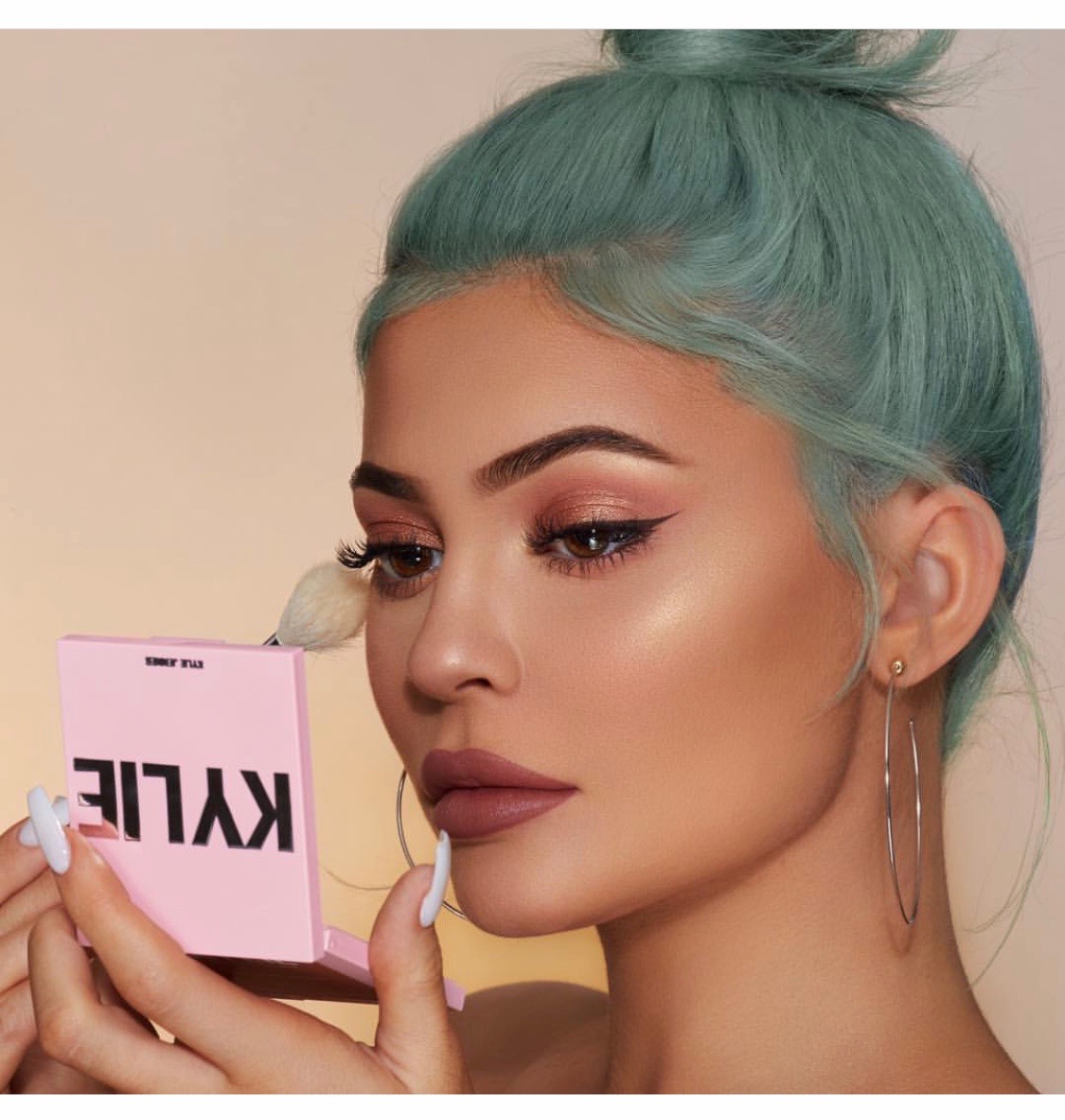
The icon used in this ad is Kylie Jenner. Both images shown above are promoting her company called Kylie Cosmetics. Jenner holds many universal concepts, emotions, and meanings in society. She is not only known for being a famous “Kar-Jenner” or “King Kylie” but she is also an amazing makeup artist that inspires millions of young people everyday. While she was born into a famous family that has their own meaning to our society, Kylie has branched out and become her own person. She has created her own business and become one of America’s self made, women billionaires. One universal meaning that she holds is her incredible influence over such a diverse fan base. She is able to set the trends and ideologies for everyone. One of the biggest “trends” set by Jenner is known as “Kylie Jenner Lips”. She is also setting makeup, hair, and fashion trends.

The advertiser connects the product being sold by, emphasizing the “KYLIE” in each ad. Kylie’s name alone is so influential, everyone knows who she is. The first ad, Jenner is laying on top of a giant red sparkling “KYLIE” and in the second it is written on the palette in her hand. By using her name in her brand, it reminds you who she is. Her name on the palette is placed in her hand at the bottom left corner in the second ad to catch your eye and focus your attention on the fact that it is Kylie Cosmetics. Seeing her name all over her brand reminds us that she is the trend setter, and this makeup must be the best if it’s Kylie’s. It really just pushes it in your face so much that you can’t forget it. From her “Kylie Lip Kits” to “Kylighters” you cannot forget who she is.

I feel that Kylie Cosmetic’s advertisements are very persuasive. They do a great job making it look like it is really amazing make up that you have to have in order to achieve Jenner’s makeup looks. Her day to day makeup looks are posted all over social media to her two hundred and fifty million followers, and it generates popularity. She is always trending number one, is the first to have her makeup products sold out constantly and is the first to try daring bold new looks. When people see this it makes you feel like you can do it too. I know it makes me feel like I want to buy her makeup just because it’s so popular and it looks so good.

I feel that the theorist Roland Barthes best fits this assignment because his idea of the signifier+signified=sign. This assignment goes perfectly because of the whole idea behind advertising. In this case Kylie Jenner, the icon, is the signifier. Kylie’s popular and perfect makeup looks is the signified, and the sign is if you use Kylie cosmetics, then you can do makeup just as well to look and be as gorgeous as her.

Based on the readings and class discussions, I was able to connect the fact that every detail is meant to be there for a reason. When we used the pictures to connect Barthes idea, I was able to understand some of the reasons behind her advertisements. For example, as mentioned before the incredible sparking red letters that spell “KYLIE” and right on top is Jenner herself laying on top in a sexy red silk dress, red shoes, hair and lipstick. She is also promoting her makeup line in the second ad as well, putting on her own “kylighter”.

From completing this assignment, I was able to learn I learned that there is so much more than we know that goes into advertising. Down to the font and colors, everything is meant to draw your attention, trigger feelings and draw you in. I’ve learned that they deliberately trigger certain types of emotions.

Looking at Icons in Our Society

Image result for kylie jenner forbes cover
Kylie Jenner
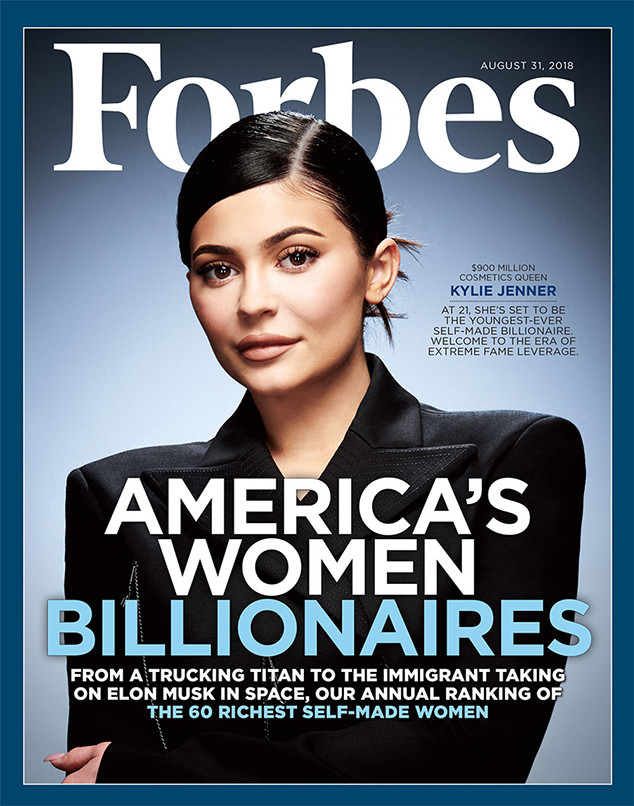
  1. The icon shown in this Forbes magazine ad is Kylie Jenner.
  2. Kylie Jenner is known for being the youngest self made billionaire. At twenty-one, she is famous for being one of America’s Women billionaires. She created her own cosmetic company, is part of a reality tv show, a social media influencer, and sponsors various companies.
  3. While there is no product being sold, this cover does a great job making you feel like you want to be her. The cover is so simple and classic, it feels rich. By capitalizing “America’s Women Billionaires” and changing the word “Billionaires” to blue, creates emphasis on the fact that she is that rich.
  4. Yes this magazine cover persuades most young women to be like her. Everything about her makes you feel like you want to be that way. By putting her face on the cover of a Forbes magazine just further intensifies the jealousy. It may even motivate you to want to work to be as successful as she is.
  5. I feel that the theorist Roland Barthes best fits this assignment because, he came up with the idea of a signifier+signified=sign. This assignment goes perfectly because of the whole ida behind advertising. In this case, Kylie Jenner the icon is the signifier, being classy and extremely wealthy is the signified and the sign is that you want to be classy and wealthy just like her.
  6. A connection I made from our readings and class discussions include, the fact that every detail is meant to be there for a reason. When we used the pictures to connect Barthes idea, I was able to understand the picture on the cover of the magazine better.
  7. From completing this assignment, I learned that there is so much more than we know that goes into advertising. Down to the font and colors, everything is meant to draw your attention, trigger feelings and draw you in. I’ve learned that they deliberately trigger certain types of emotions.
Design a site like this with WordPress.com
Get started