Amanda Lyons
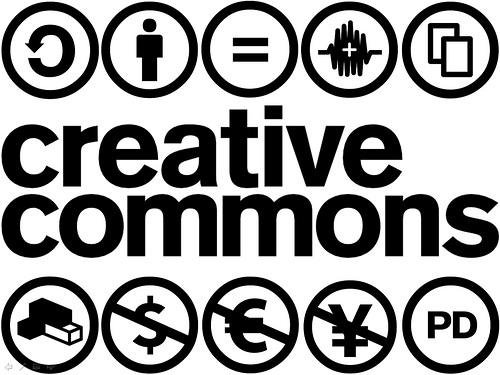
The Creative Commons project alters the way we understand ownership and copyright. It allows us to share knowledge and creativity legally, by providing copyright licenses in order to give the public the ability to work on and share your work depending on what you allow. This site is changing how we view copyrights because it completely goes against what we know and allows works to be built on and distributed. We typically see a copyright as a complete ownership of a certain work, meaning you cannot use or copy any of that work for your own. You would have to cite and give credit to the true owner in order to use their work. This organization is devoted to “expanding the range of creative works available for others” and “has released several copyright-licenses, known as Creative Commons licenses, free of charge to the public.”.
This project can however affect the subject(s)of a work. For example, if someone were to create upon another’s work in a negative way or change the entire meaning, they could also try to claim it as their own. Having such ability to really create whatever you want, it can really go either way, positively or negatively.
Having a Creative Commons license can be a great advantage, it may have altered the works cited in the work of Sherrie Levine and Michael Mandiberg. A man named Walker Evans in 1936 photographed a family of sharecroppers during the depression era. In 1979, Sherrie Levine then rephotographed his work from the exhibition catalog First and Last. In 2001, Michael Mandiberg scanned the photographs and posted Levine’s copies online. Mandiberg’s work is controversial as to whether or not it is considered stealing, or recreating another’s work. If Levine and Mandiberg had a Creative Commons license they would have been able to create whatever they wanted with the original photograph and call it their own rather than rephotographing or scanning the work.
The Creative Commons project can also afford the protection to the right of publicity. It allows the freedom to share your work with the license,“When you apply…a CC license to your material, you also agree to waive or not assert any publicity, privacy, or personality rights that you hold in the material you are licensing, to the limited extent necessary for others to exercise the licensed rights.” This quote, pulled from the Creative Commons website, covers your publicity and privacy rights.
I would suggest the philosopher Walter Benjamin would best fit this assignment. After reading his ideas on reproduction of art, I learned how it supports the idea of the Creative Commons license. He mentions, “…reproducibility [is] an integral feature of the medium [photography]…” meaning he was emphasizing the importance of the ability to reproduce and build upon art in order to enhance thinking.
One of the connections I made from the class discussion and readings to this assignment was when we read the Work of Art in the Age of Mechanical Reproduction by Walter Benjamin. I was also able to connect this assignment to my work towards my final project for this class. While doing some research for my paper I noticed many images or sites had the copyright logo at the bottom. (Can be seen below) From completing this assignment I actually learned a lot. Originally, I had no clue what Creative Commons meant and I was very confused. I had no prior knowledge of the Creative Commons project and how it is really changing society. Once I read more into the topic I became more and more intrigued and enjoyed learning about completing this assignment.

 Amanda Lyons